Noah Lang · 25 September 2026
Quantum Tech Partnerships Spark Review of Funding Focus in Polish Medical Institutions
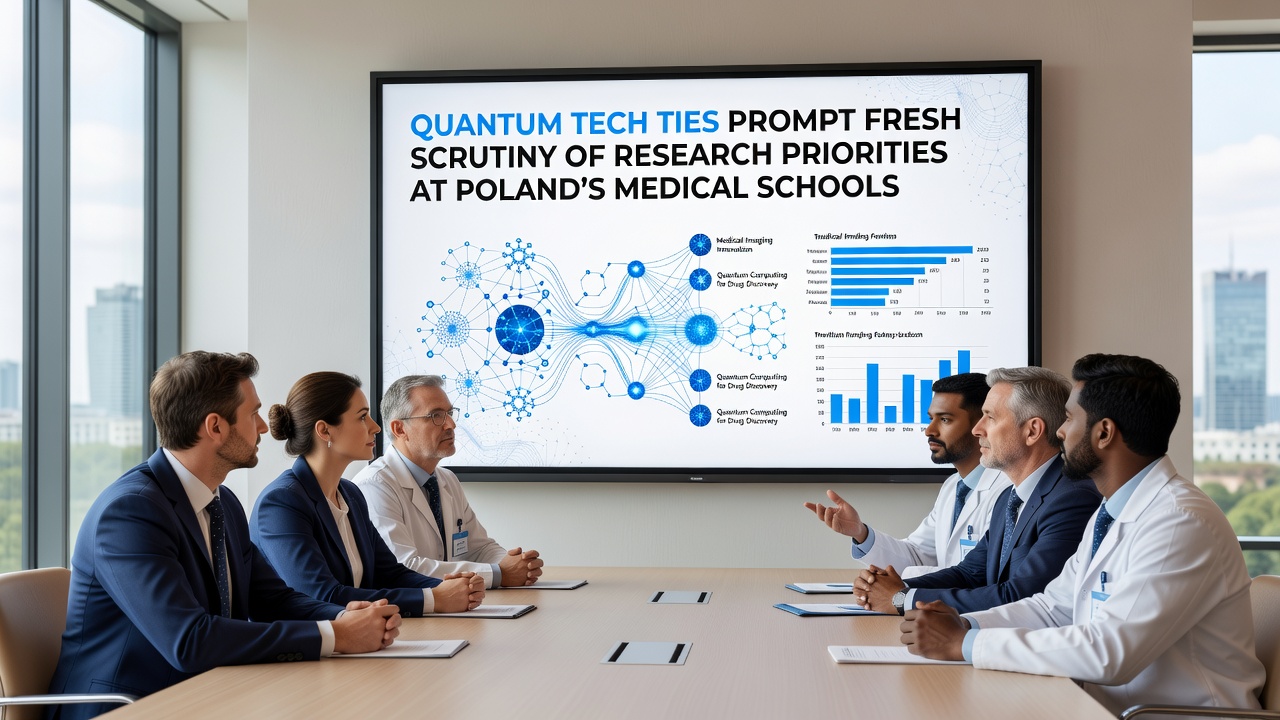
Quantum technology collaborations have begun to reshape research agendas at several medical schools across Poland, and observers note that this shift has triggered renewed examination of how institutions allocate resources between traditional biomedical studies and emerging computational approaches. Data from the Polish Ministry of Education and Science shows that partnerships with quantum computing firms increased by 35 percent between 2023 and 2025, with medical faculties at universities in Warsaw, Krakow, and Wroclaw accounting for a significant share of these agreements.
Researchers at these institutions now apply quantum algorithms to model protein folding and simulate drug interactions at speeds unattainable through classical computing, yet administrators report that core clinical training programs receive comparatively less new investment during the same period. According to figures released by the European Commission in its 2025 Horizon Europe progress report, Poland secured 48 million euros in quantum-related health grants, while conventional epidemiology and public health projects saw flat funding levels.
Expansion of Quantum Applications in Medical Research
Medical faculties have integrated quantum sensors into diagnostic imaging prototypes, and teams at the Medical University of Gdansk completed initial trials of quantum-enhanced MRI techniques in late 2025. These projects rely on external technology providers based in Germany and the United States, which supply both hardware access and joint research personnel. A separate initiative at Jagiellonian University Medical College focuses on quantum machine learning for analyzing genomic datasets, and preliminary results presented at an international symposium in March 2026 indicated a 22 percent improvement in variant detection accuracy compared with standard methods.
Yet internal reviews at multiple institutions highlight that faculty time dedicated to these quantum projects often diverts attention from established areas such as infectious disease modeling and surgical training simulations. Ministry records indicate that 14 percent of research hours reported by medical school staff in 2025 involved quantum-adjacent computing tasks, up from 6 percent in 2022.
Scrutiny Intensifies Ahead of September 2026 Deadlines
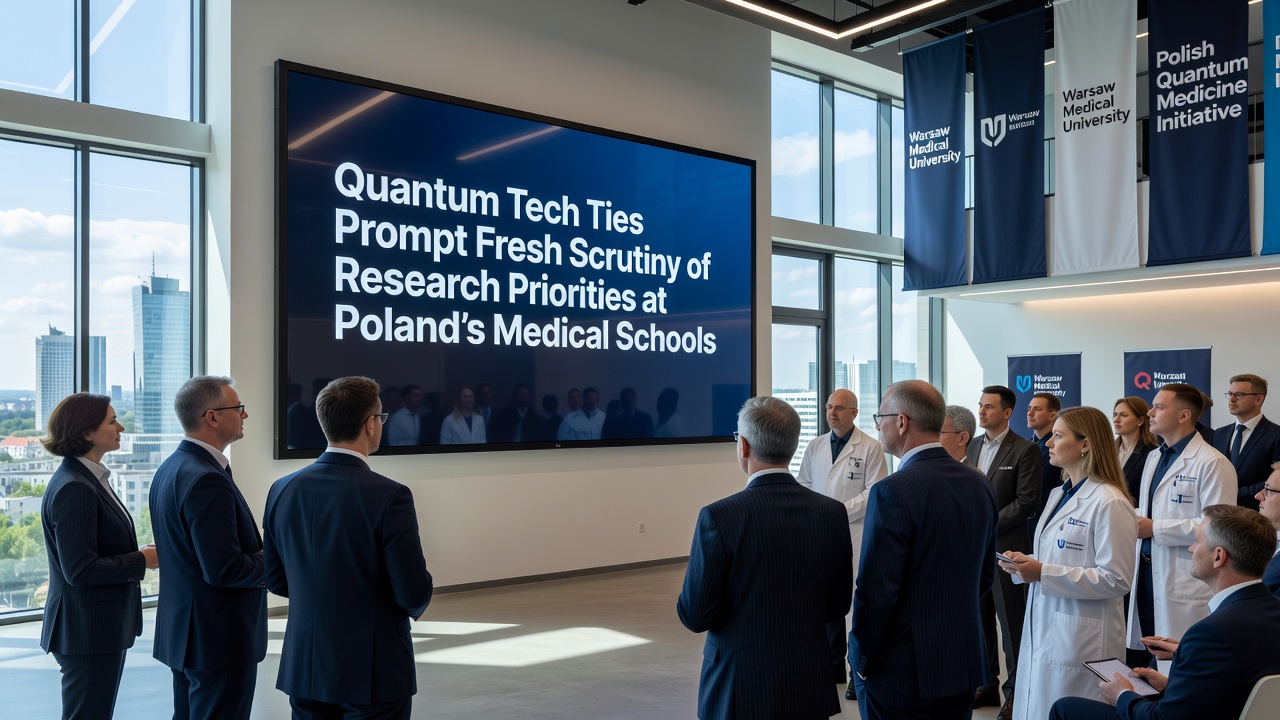
National accreditation bodies scheduled policy consultations for September 2026 to assess whether current research portfolios align with national health priorities outlined in the 2024-2030 Medical Education Strategy. Representatives from the Conference of Rectors of Academic Medical Schools have submitted data showing that quantum-linked grants now represent 19 percent of total external research income at participating faculties. This proportion has prompted questions about long-term sustainability once initial partnership contracts expire.
One analysis prepared by the Polish Academy of Sciences compared resource distribution at ten medical schools and found that departments without quantum collaborations reported stable but modest increases in publication output, whereas quantum-partnered units recorded higher citation rates in specialized journals yet lower numbers of student-led clinical studies. Observers note that these patterns mirror trends documented in similar reviews conducted by the National Institutes of Health in the United States, where quantum health initiatives have also prompted internal priority assessments.
Case Examples from Affected Institutions
At Poznan University of Medical Sciences, administrators reallocated two laboratory spaces previously used for cardiovascular tissue research to accommodate quantum optics equipment supplied through a private-sector agreement finalized in 2024. Faculty members involved in the transition reported that grant applications for traditional cardiology projects declined by 28 percent over the following year. Meanwhile, the same department published six papers on quantum-assisted cardiac modeling between January and June 2026.
Similar adjustments occurred at the Medical University of Lublin, where a new quantum bioinformatics center opened in early 2026 with support from an Australian research consortium. University reports indicate that 11 doctoral candidates shifted their dissertation topics from clinical microbiology to quantum data analysis within the first six months of the center's operation. Those overseeing curriculum development have since requested additional guidance on maintaining balance across research streams.
Broader Context and External Benchmarks
International comparisons reveal that other European medical education systems have encountered parallel questions. teh UK Research and Innovation agency published findings in 2025 showing that quantum health investments correlated with a temporary 15 percent reduction in non-quantum grant submissions at participating universities. Canadian Institutes of Health Research data released in the same year documented comparable shifts in resource emphasis following the launch of its Quantum Biology Initiative.
Polish medical schools continue to meet enrollment targets for clinical degrees, and graduation rates have remained consistent with prior years according to Central Statistical Office records. The current discussion centers instead on whether the composition of faculty research activity will influence future curriculum design or specialist training pathways once the September 2026 consultations conclude.
Conclusion
Quantum technology partnerships continue to expand within Polish medical education, and the resulting distribution of research effort has drawn formal attention from oversight bodies. Available statistics and institutional reports provide concrete measures of this reallocation, while scheduled policy reviews in September 2026 will determine whether existing frameworks require adjustment to maintain alignment with national health objectives.