Blake Carter · 2 September 2026
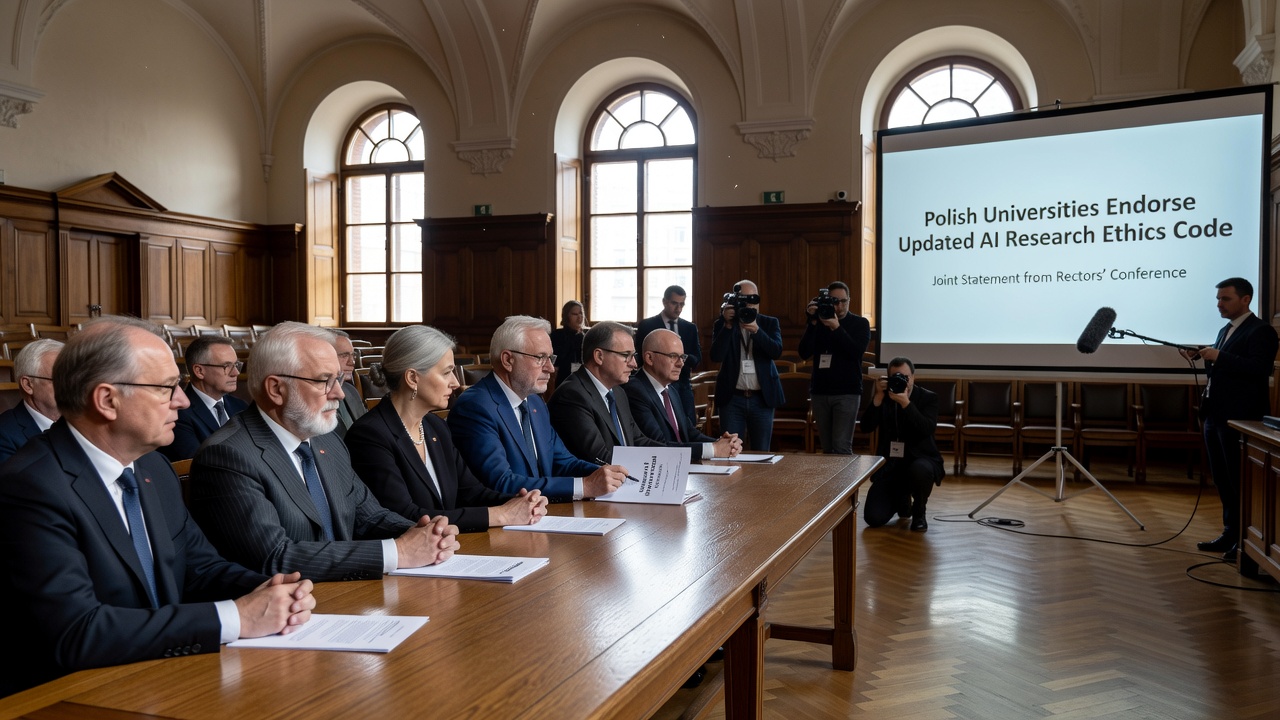
Polish universities have formally adopted a revised code of ethics governing artificial intelligence research, marking a significant update to guidelines first established in 2019. The new framework addresses rapid advancements in machine learning, generative models, and data-driven methodologies across academic institutions nationwide.
Key Revisions in the Code
The updated code emphasizes mandatory transparency in algorithm development, requiring researchers to disclose training datasets and model architectures. Provisions on bias mitigation now mandate regular audits to prevent discriminatory outcomes in applications ranging from healthcare diagnostics to educational tools. Data privacy standards have been strengthened in line with GDPR expansions, with explicit rules on synthetic data usage and consent protocols for human subjects involved in AI experiments.
Institutions including the University of Warsaw, Jagiellonian University, and Wrocław University of Science and Technology participated in drafting the revisions through a national consortium. The code introduces requirements for ethical review boards to include AI specialists alongside traditional ethicists, ensuring technical feasibility assessments accompany moral evaluations. Penalties for non-compliance range from funding restrictions to publication bans in affiliated journals.
Implementation and Impact
Rollout begins in the upcoming academic semester, with training workshops scheduled for faculty and graduate students. Universities will integrate the guidelines into existing research approval processes, supported by a shared digital platform for compliance tracking. Early reactions from the academic community highlight approval for the code's balance between innovation and accountability, though some express concerns over administrative burdens on smaller research teams.
Experts note the revisions position Polish institutions competitively within European AI ethics initiatives, potentially facilitating cross-border collaborations under Horizon Europe programs. Monitoring committees will evaluate effectiveness after one year, with potential amendments based on emerging technologies such as multimodal AI systems. The framework is expected to influence policy discussions at the national level regarding broader AI governance.